
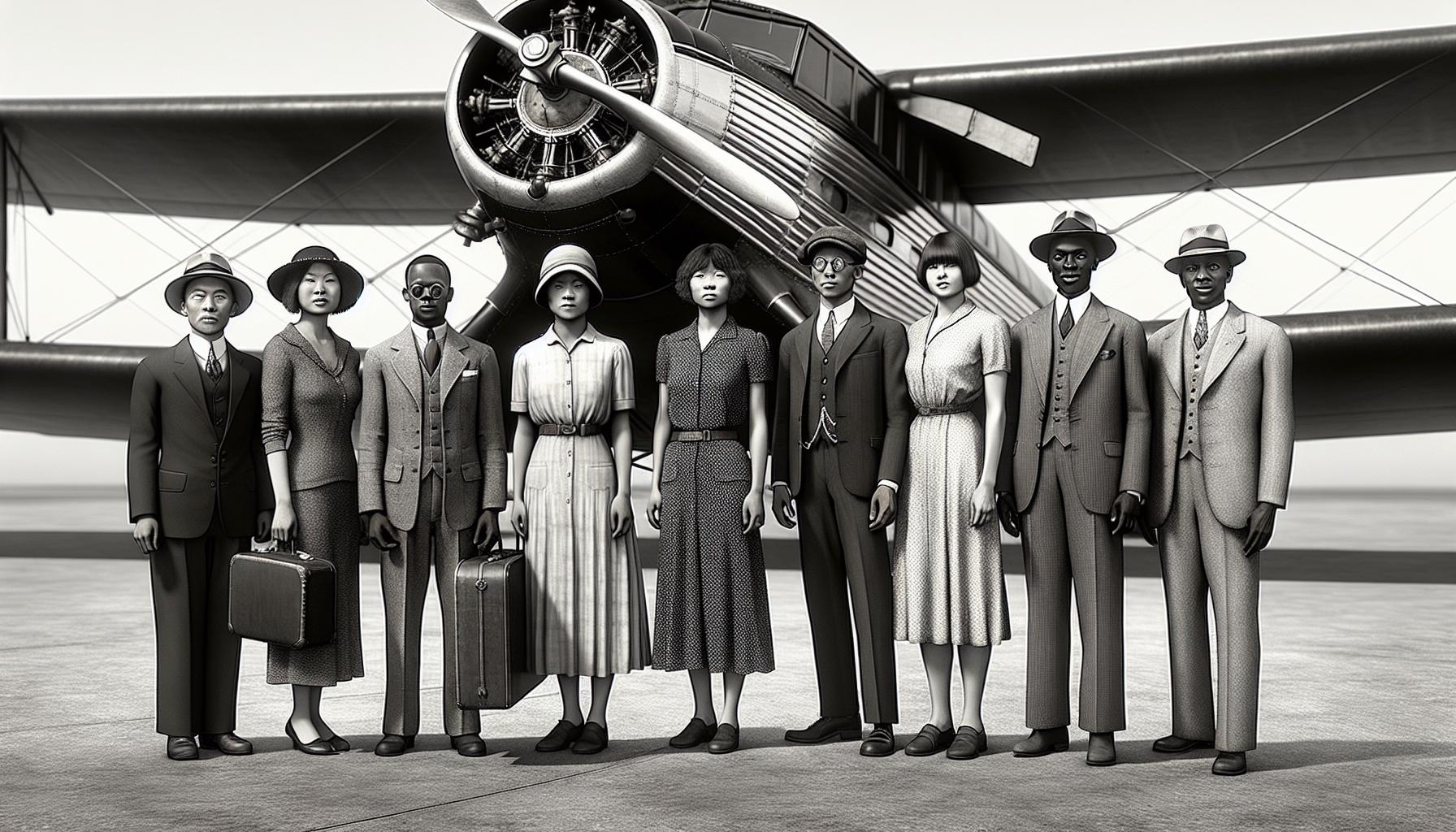
While we often think of stock photography as a modern digital phenomenon, its fascinating history stretches back nearly a century. The story begins in the 1920s when magazines and newspapers sought cost-effective alternatives to maintaining full-time photographers on staff.
The birth of stock photography can be traced to a single groundbreaking image: a group portrait taken in front of a tri-motor airplane by H. Armstrong Roberts between the 1920s and 1930s. What made this photo revolutionary wasn’t just its composition – it was the first time a photographer obtained model releases from all participants, allowing the image to be sold multiple times to different media outlets. This innovative approach laid the foundation for today’s billion-dollar stock photography industry.
Key Takeaways
- The first documented stock photo was taken by H. Armstrong Roberts in the 1920s, featuring a group of people in front of a tri-motor airplane.
- The revolutionary aspect was that Roberts obtained model releases from all subjects, making it the first legally reusable commercial photograph.
- Early pioneers like H. Armstrong Roberts (Retrofile) and Otto Bettmann (Bettmann Archive) established the foundation for modern stock photography libraries.
- Stock photography transformed the industry by reducing production costs by 60-80% compared to custom photoshoots and making professional images more accessible.
- The initial rights-managed (RM) licensing model established crucial standards for the industry, with prices ranging from $50 to $1,000 per use.
The Birth of Stock Photography in the 1920s
The first documented stock photo emerged in the 1920s, revolutionizing how publications accessed visual content. This innovation created a new business model that transformed the photography industry.
The First Commercial Stock Photo Archive
What is the first stock photo captures a group of people standing in front of a tri-motor airplane. H. Armstrong Roberts photographed this historic image between 1920-1930, making it unique by obtaining signed model releases from all six subjects. This groundbreaking approach allowed Roberts to sell the image multiple times to different publishers, art directors, and advertisers.
Early Stock Photo Pioneers
H. Armstrong Roberts established one of the first stock photo libraries, Retrofile, setting industry standards for commercial photography licensing. In the 1930s, Otto Bettmann expanded the concept by creating the Bettmann Archive, starting with 15,000 images. The archive used an innovative catalog indexing system to organize photographs, making them easily accessible to newspapers and magazines.
| Pioneer | Contribution | Year |
|---|---|---|
| H. Armstrong Roberts | First model-released stock photo & Retrofile library | 1920s |
| Otto Bettmann | Bettmann Archive with 15,000 initial images | 1930s |
The success of these early pioneers demonstrated the commercial viability of pre-shot, licensed photographs. Their business model provided publications with an affordable alternative to commissioning photographers or maintaining in-house photography staff.
Evolution of Stock Photo Distribution

Stock photo distribution underwent significant transformations from the 1940s through the 1990s, shifting from physical archives to digital platforms.
Physical Photo Collections
Photo archives expanded rapidly between the 1940s and 1980s to meet increasing media demand for imagery. The Hulton Archive, acquired by the BBC in 1957 for £86 million, housed significant historical collections from the Daily Express and Evening Standard. Tony Stone revolutionized the industry in the 1960s by introducing art-directed photos with multiple licensing options, establishing a collection that later became part of Getty Images.
Print Catalogs and Libraries
Distribution systems relied on printed catalogs updated annually for journalists and publishers. Key features of this system included:
- Physical storage of prints and negative films
- Annual catalog distribution to subscribing agencies
- Manual retrieval processes by archive workers
- Index card navigation systems
- Postal delivery of requested prints
- Time-intensive search procedures
This system remained standard until digital technology transformed distribution methods in the 1990s. The digitization of major collections, like the Hulton Archive’s historical stock photos from the 1880s to 1990s, marked a pivotal shift in accessibility and distribution efficiency.
| Era | Distribution Method | Key Characteristics |
|---|---|---|
| 1940s-1980s | Physical Archives | Print storage, manual retrieval |
| 1960s | Art-Directed Collections | Multiple licensing options |
| 1990s | Digital Transformation | Electronic cataloging, online access |
The First Stock Photo Business Model

The initial stock photo business model emerged in the 1920s as a solution for publishers seeking cost-effective visual content. This pioneering approach transformed how media organizations accessed professional photography.
Licensing and Rights Management
Rights-managed (RM) licensing established the foundation for stock photo distribution. Publishers obtained restricted usage rights for specific images with clear terms on reproduction limits duration. The RM model provided two key options:
- Non-exclusive licenses for shared image usage across multiple clients
- Exclusive licenses granting sole publishing rights to a single buyer
- Additional usage rights required separate purchases for each new application
- Rights-managed images ranged from $50 to $1,000 per use
- Pricing varied based on:
- Image exclusivity status
- Duration of usage rights
- Geographic distribution scope
- Publication medium type
| License Type | Price Range | Usage Rights |
|---|---|---|
| Non-exclusive RM | $50-$500 | Limited time single use |
| Exclusive RM | $500-$1,000 | Restricted single client |
Impact on Commercial Photography
Stock photography revolutionized commercial photography by introducing a new business model that balanced cost-effectiveness with quality imagery. The innovation created lasting changes in how businesses access visual content.
Changing the Photography Industry
Commercial photography transformed when stock photos eliminated the risks of commissioned photoshoots. Pre-shot images reduced production costs by 60-80% compared to custom photography sessions. Digital technology enhanced this shift by enabling photographers to produce high-quality images with affordable equipment costing $2,000-$5,000, compared to previous setups requiring $10,000-$20,000 investments.
Setting Industry Standards
Stock photography established crucial industry standards that shape modern commercial photography practices:
- Model Releases: Mandatory signed agreements from all subjects
- Rights Management: Clear licensing terms for image usage
- Quality Controls: Standardized technical specifications for image submissions
- Metadata Systems: Organized categorization protocols for image searching
- Pricing Structures: Tiered licensing fees based on usage scope
- Technical Requirements: Specific file formats resolution standards
- Legal Documentation: Standardized property releases location permits
- Protects photographers’ intellectual property
- Ensures legal compliance for commercial use
- Maintains consistent quality across platforms
- Streamlines image discovery distribution
- Creates transparent pricing models
- Establishes professional expectations
- Facilitates global image licensing
| Standard Impact Metrics | Before Stock Photos | After Stock Photos |
|---|---|---|
| Average Project Cost | $5,000 – $15,000 | $50 – $500 |
| Production Time | 2-4 weeks | Immediate |
| Image Rights Duration | Limited | Perpetual |
| Market Accessibility | Local Only | Global |
Conclusion
The birth of stock photography changed the way we think about commercial images forever. H. Armstrong Roberts’ groundbreaking approach to model releases and image licensing laid the foundation for today’s thriving industry. We’ve seen how this innovative business model transformed from physical archives to digital platforms while maintaining its core purpose: providing cost-effective high-quality imagery.
Looking at stock photography’s journey reminds us that great innovations often come from practical solutions to everyday challenges. What started as a simple way to make photography more accessible has grown into a global industry that continues to shape how we create and share visual content.